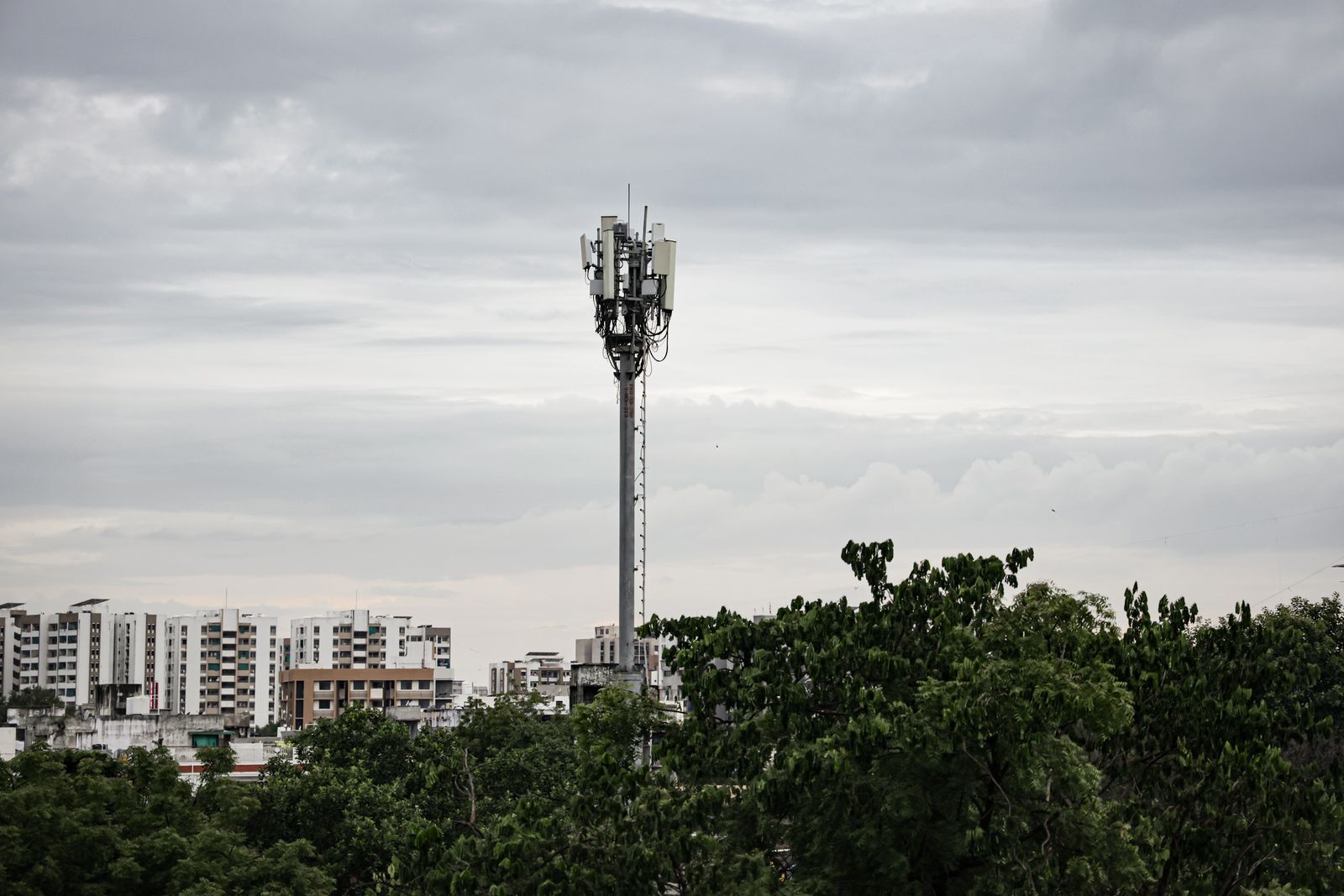
India’s telecom sector in late 2026 is in a consolidation phase. 5G is now everywhere in cities and most districts, with more than 400 million users and roughly 523,000 5G base stations by mid-2026, and operators are focused on earning money from it. Satellite broadband from Starlink and Jio-SES is licensed but, on the latest reports, still waiting for final spectrum, while a new rulebook under the Telecommunications Act, 2023 changes how companies get permission to run networks.
Here is what the numbers say, what is still pending, and what it means for users, businesses and people working in telecom and networking.
The subscriber picture (TRAI, August 2026)
TRAI’s subscriber data for the end of August 2026, released on 28 September, shows a large but slow-growing market:
| Metric (end of August 2026) | Figure |
|---|---|
| Total wireless subscribers (mobile + fixed wireless) | 1,312.25 million |
| Mobile-only subscribers | 1,293.43 million |
| Wireline subscribers | 48.45 million |
| 5G fixed wireless access (FWA) connections | 13.45 million (Jio 9.42 million, Airtel 4.03 million) |
| Mobile net additions in the month | About 5.5 million |
| Wireless tele-density | 91.69% |
Market shares in mobile were Reliance Jio 39.31%, Bharti Airtel 38.01%, Vodafone Idea 15.43% and BSNL 7.24%. In other words, it is a two-player market at the top, with Vodafone Idea and BSNL fighting to hold share.
5G: from rollout to returns
The pace of the rollout was fast. In March 2025 the government told the Lok Sabha that 4.69 lakh 5G base stations had been installed and that 5G was available in 773 of 776 districts. Industry analysis puts the count at about 523,000 base stations by mid-2026, with 5G users above 400 million.
The challenge now is revenue. Average revenue per user is rising slowly through tariff increases, but the clearest new business is fixed wireless access: home broadband delivered over 5G to a small indoor or outdoor unit, without laying fibre to each house. Notably, rural connections now make up just over half of 5G FWA users in TRAI’s data, which shows FWA filling gaps where fibre has not reached.
Is 5G FWA right for your home?
- Good fit: areas without reliable fibre, rented homes where you cannot drill for cables, and as a backup link for people working from home.
- Less ideal: where good fibre is available, which usually offers more consistent speeds and latency, especially in the evening.
- Before you sign up: check indoor 5G signal at your location, ask about fair-use limits, and confirm installation and equipment charges in writing.
Satellite internet: licensed, not yet fully live
Three satellite players hold authorisations to offer satellite broadband: Starlink, Eutelsat OneWeb and Jio-SES. Amazon’s Project Kuiper is at an earlier stage. According to September 2026 reporting by Indian Infrastructure, Starlink and Jio-SES were still completing security clearances and awaiting final spectrum allocation. Earlier, the Department of Telecommunications (DoT) had granted provisional spectrum for demonstrations, but that does not allow full commercial service.
Two policy points matter:
- Administrative allocation, not auction. The government has said satcom spectrum will be assigned administratively. TRAI recommended in May 2025 a spectrum charge of 4% of adjusted gross revenue, with a minimum per-MHz fee and an extra ₹500 per urban subscriber for low-earth-orbit services.
- New spectrum rules. DoT consulted on draft Telecommunications (Spectrum Assignment by Administrative Process) Rules, 2026, which include mandatory security clearance for consumer satellite broadband and satellite phone services.
Separately, Reliance Jio’s proposed constellation of about 1,600 low-earth-orbit satellites was reported to have received validation from IN-SPACe, ISRO and DoT’s Wireless Planning and Coordination wing in July 2026.
Who will actually use satellite broadband?
Expect it to serve remote villages and hill areas, ships, aircraft, disaster response teams, and businesses that want a backup link independent of terrestrial fibre. Reported equipment costs run into tens of thousands of rupees, so in cities it is likely to be a niche product rather than a replacement for fibre or 5G FWA.
New rules under the Telecommunications Act, 2023
The Telecommunications Act, 2023 replaced the colonial-era Telegraph Act and moved the sector from “licences” to authorisations. In June 2026 the government notified the Telecommunications (Authorisation for Provision of Principal Telecommunication Services) Rules, 2026. They define categories such as captive non-public networks, cable landing stations, core telecom networks and earth stations in motion.
For businesses, the most practical change is clarity on captive non-public networks, also called private 5G. A port, factory, mine or large campus can run its own network for automation, sensors and worker safety, either with spectrum leased from an operator or through direct assignment where permitted. If you are planning one, involve your legal and network teams early and check the current DoT guidelines on eligibility and spectrum.
6G: research now, products later
India wants to help shape 6G standards rather than only adopt them, as set out in the Bharat 6G Vision released in 2023. As of February 2026, the Telecom Technology Development Fund had approved 104 projects worth ₹271 crore for 6G-related research, and TEC is working with IIT Bombay on 6G architecture, AI-driven networks and satellite integration.
Global 6G specifications are expected around the end of the decade, so commercial 6G phones and networks are still years away. The weak point is research spending: Indian telecom R&D is well under 1% of revenue, far below global equipment makers.
Gaps that still need work
- Tower fiberisation: only about 36% of towers are connected by fibre, against a target of 80% by 2030 in the draft National Telecom Policy, 2025. Without fibre backhaul, 5G speeds suffer.
- Vodafone Idea’s finances: a weak third operator limits competition and investment.
- Rural quality: coverage numbers look good, but indoor signal and consistent speeds outside cities remain patchy.
Careers: where the jobs are
The rollout phase created demand for field engineers and tower crews. The next phase rewards different skills:
| Area | What employers look for |
|---|---|
| 5G core and RAN | Cloud-native core, Open RAN concepts, RF optimisation, vendor platforms |
| Network automation | Python, Ansible, APIs, intent-based networking |
| Private 5G and enterprise | Solution design for factories, ports and campuses; industrial IoT |
| Telecom cloud | Kubernetes, Linux, virtualised network functions |
| Network security | Firewalls, zero trust, telecom-specific threats such as signalling attacks |
| Fibre build-out | Planning, OSP design, splicing and project management |
For people starting out, a solid networking base still matters. Our guide to whether CCNA is still worth it in 2026 covers that first step, and the cybersecurity certification roadmap helps if you want to move towards network security.
Last reviewed: 8 October 2026.
Sources
- TRAI: Telecom subscription data and press releases
- TelecomTalk: India’s wireless subscriber base, August 2026 (TRAI data)
- Indian Infrastructure: Satcom, new licensing rules and 6G (September 2026)
- Tribune India: 4.69 lakh 5G BTS installed, Lok Sabha reply (March 2025)
- Department of Telecommunications
Leave a Reply